The gateway to conservation.
SMSC is one of the only programs in the country where you can wake up, hop in a van, drive to a zoo, get behind the scenes tour of the zoo, drive back home, and get college credit for it. During our eleventh week at SMSC, we took a close and hands on look at zoos and their role in conservation.
Due to the government shutdown, we had to pivot our initial plans to go to the Smithsonian National Zoo in Washington DC to another Association of Zoos and Aquariums (AZA) accredited zoo, the Maryland Zoo in Baltimore. After a very uneventful traffic filled morning on the George Washington Parkway, we arrived at the gates of the Maryland Zoo, where we were escorted to their animal hospital and research center.
Inside of the animal hospital were a couple of rare and awesome species. We were first shown the Allegheny woodrat (Neotoma magister) a threatened species native to the Appalachian Mountains range. The scientists showed us their specialized habitats that they created to mimic their normal nesting sites. Seeing the methods that the scientists used to enrich their habitat, such as adding egg cartons and cardboard boxes, was neat. After we finished admiring the woodrats, we were taken to a seperate room to see a species that is extinct in the wild. The Panamanian golden frog (Atelopus zeteki) was last seen in the wild in 2009 and has been extinct in the wild ever since. Before the population became extinct in the wild, populations were taken for captive breeding and research, and a population was brought to the Maryland Zoo. Inside the animal hospital are hundreds of golden frogs, which are being managed and bred to eventually be released into the wild. Getting to see an animal that does not exist in the wild but is abundant in front of you is a surreal experience.
The rest of the zoo trip was filled with hands on experience. We all got to go through the petting zoo, feed penguins and river otters, and see giraffes. Throughout the rest of the zoo tour, I noticed something about the technology and signs they were using to showcase facts about the animals, no one was reading them. Instead, they were talking to keepers, volunteers, or amongst each other. No amount of technology, graphic design, or text could replace what a keeper or volunteer was telling them about the animal right in front of them. Conservation is about the personal connection you make with the species, and the way I saw that being most effective was with people. In the future, focusing on getting people involved with volunteering or working in communication, could draw many more people from uninformed to conservationist.
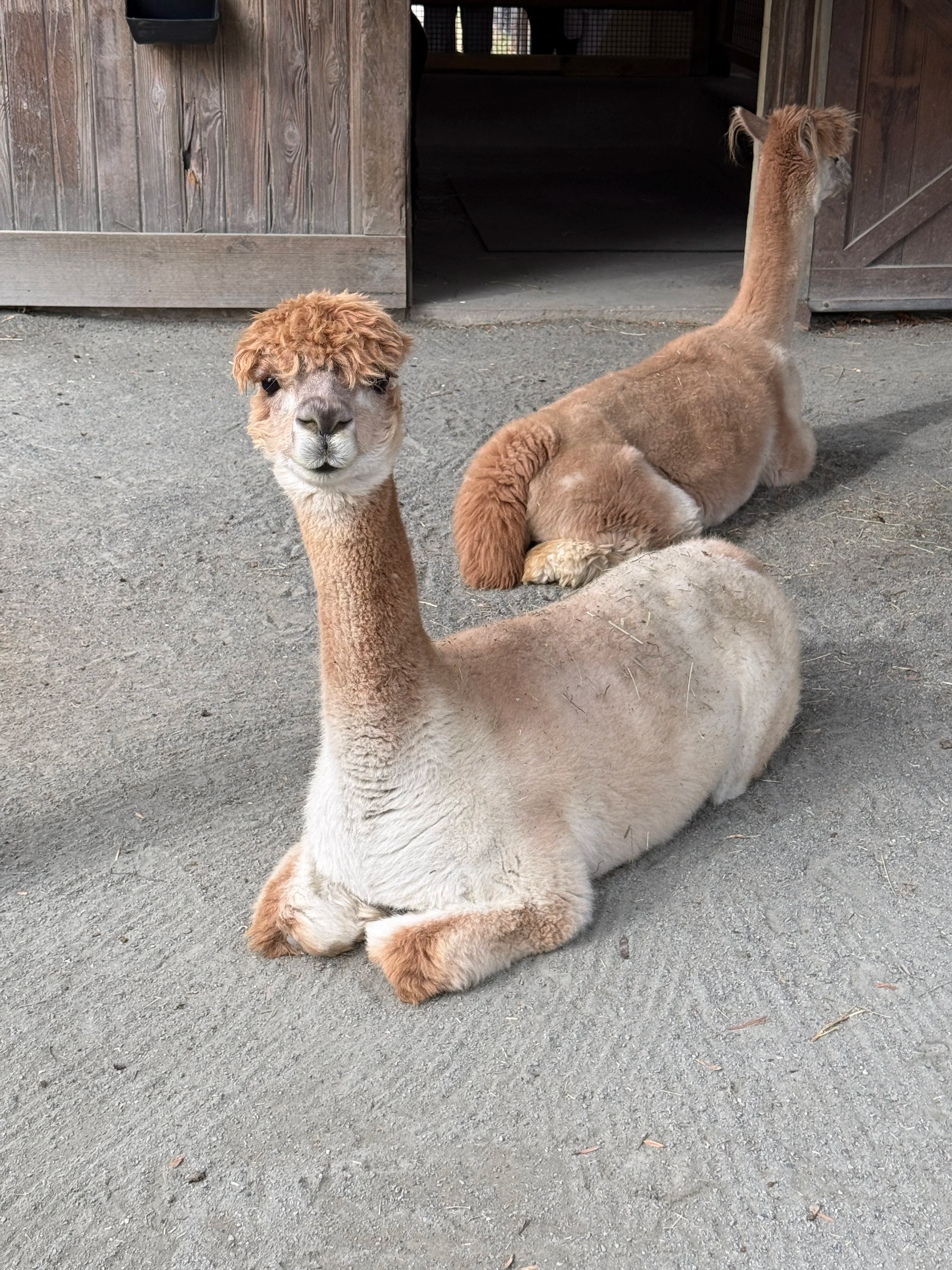
Hello Mr. Alpaca (Lama pacos)