Sustainable agriculture is awesome.

Farming was the focus of our ninth week at SMSC. Throughout the week we visited two different farms first was the Oak Spring Garden Foundation and second was Bean Hollow Grassfed. These farms gave us behind the scenes tours of their operations, showing us the ways they are working to make farming more sustainable, and how they are building relationships with the local community.
The first tour we went on was with the Oak Spring Garden Foundation located in Upperville, VA. Our tour began with a walkthrough of their new garden which featured tons of species of flowers. My favorite section in their garden was the vine archway, where vine plants were able to grow up and around creating a tunnel with vegetables and plants surrounding you as you walked through. We then transitioned to their chicken area where we learned about methods to reduce predation on chickens such as adding geese to the population of chickens which their size and presence deters predators. We then finished the tour by picking organic carrots to give to their farm share program. Unfortunately during our harvesting some of the carrots were either too small or broke the stems (what a shame) so we had to clean them and take them home for ourselves (such a bummer).
The second tour we went on was at Bean Hollow Grassfed in Flint Hill, Virginia. Bean Hollow Grassfed focuses on livestock farming and do it with a sustainable agriculture mindset. Our tour began by going over their goals and mission to sustainably farm livestock while keeping the pasture health as a top priority. We then got to go on a pasture walk where we were greeted by goats, cows, sheep, and farm dogs who were helping to herd the animals. Our tour concluded by watching them load a large cow which was being taken to market that week.
Sustainable agriculture is something that I didn’t expect to find interesting before I visited these farms. After visiting the farms I have a fire inside of me to start my own garden and grow my own food. Sustainable agriculture is critical for innovation in conservation. The current traditional model of farming neglects many important ecological factors for the sake of profits. By reducing consumption and not having a profit first mindset where it comes to food, we can focus on the ecology, and make farming a more sustainable process to protect our planet.
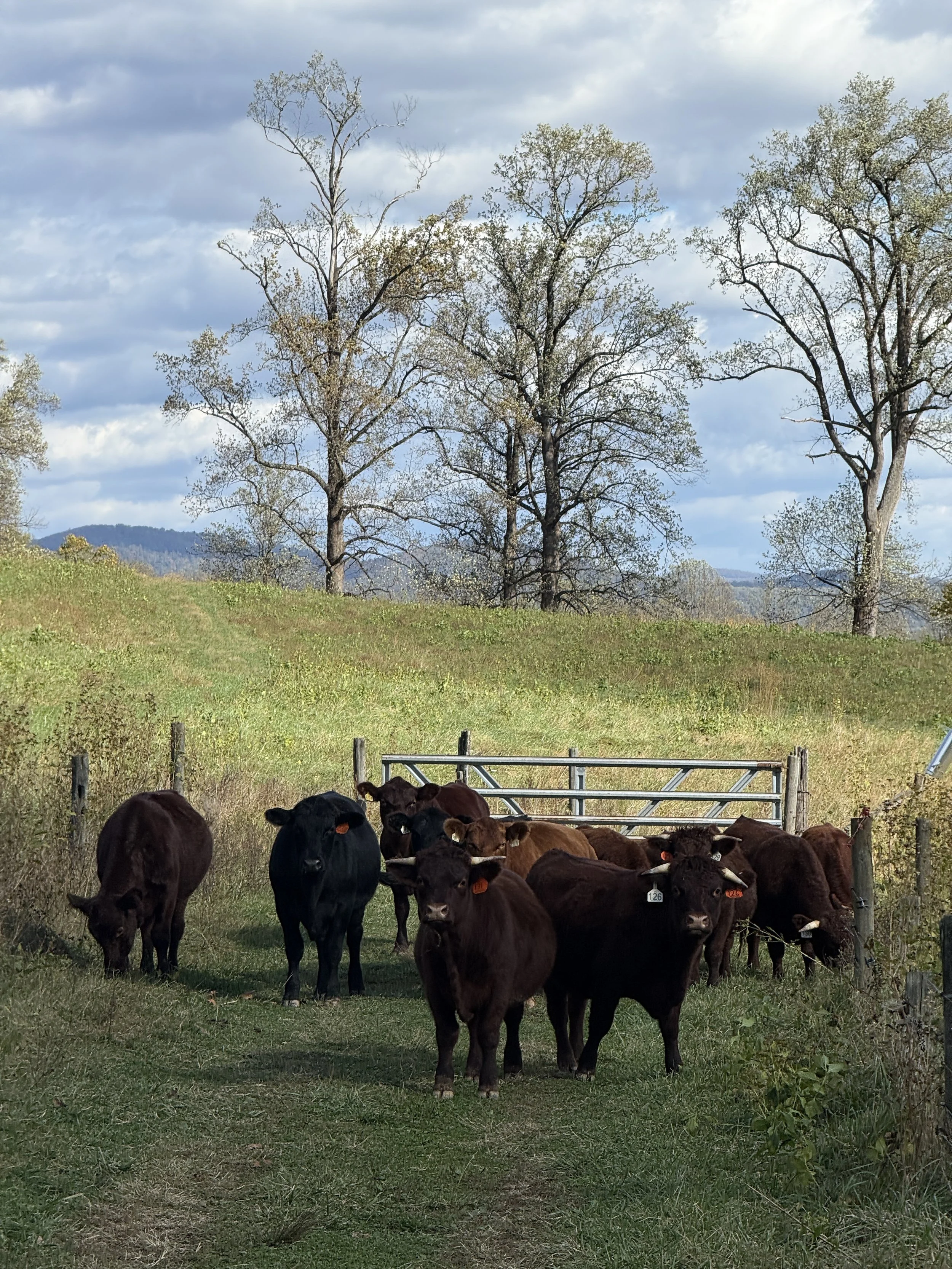
Cows are really, really cool.